

Replication - Importing Users and Groups
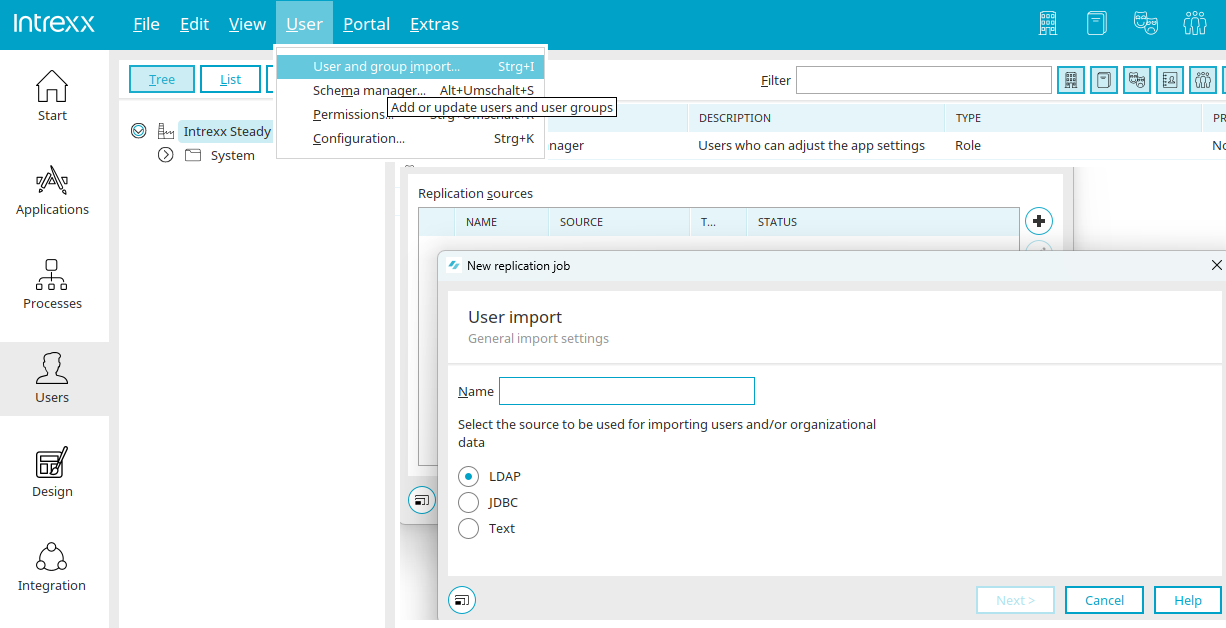
In the "Users" module, you can use the main menu option "Users / Import Users and Groups" to import data from
-
LDAP directories (e.g., Windows Active Directory)
-
JDBC Sources
-
ASCII files (e.g., Linux/Unix passwd)
import.
Replication Sources
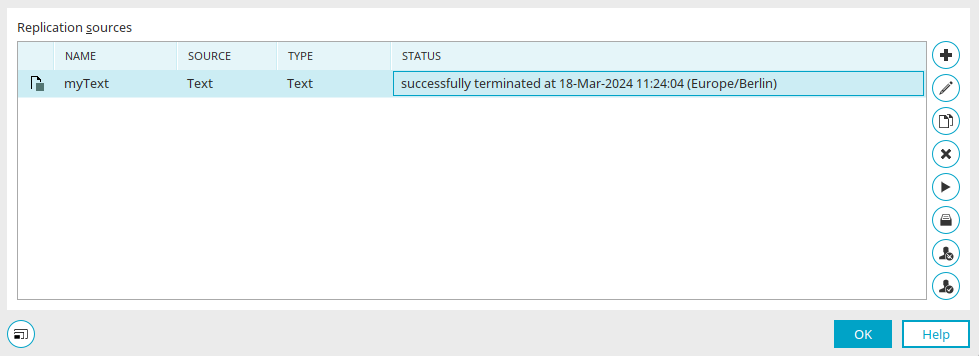
The name of a replication source is displayed here. Under "Data Source," "Text" is displayed for text sources, the server name for LDAP sources, and the connection for JDBC sources. In the "Status" column, you can see whether the replication was successful or if any errors occurred.
 Add /
Add /  Edit /
  Copy
Copy
Each one opens a dialog box where you can create a new replication source or edit an existing one. "Copy" takes the settings from the currently selected replication source and enters them as a new replication source in the subsequent dialog boxes. The settings there can, of course, be modified as desired.
 Delete
Deletes the currently selected source.
 Start Replication
Starts replication.
 View History
Opens a dialog box that provides information about the replication status.
 When logging in, do not check whether the user exists in this source
The registration will not be verified. You can tell that this setting is enabled by a small  square that appears next to the source icon in the first column of the replication sources list.
 When logging in, check whether the user exists in this source
Disables the setting described above. When a user logs in, the system checks whether that user exists in the LDAP source. If it does not exist, the Intrexx user will be deleted and the login will be denied.
Click "Next."
General Information
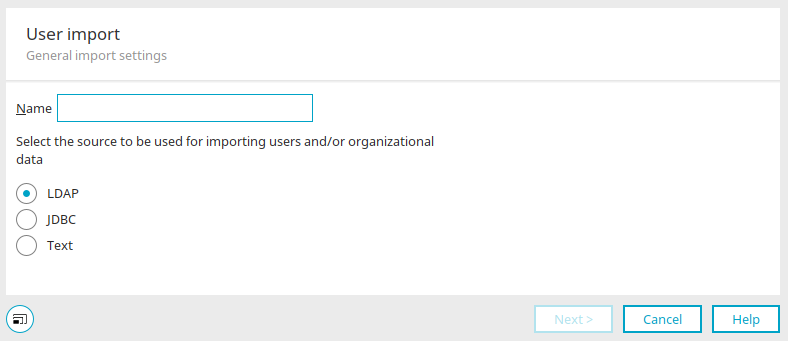
Enter a name here and select the option you want.
Click "Next." You can find information about the subsequent dialogs here:
More Information
Objects, Classes, and Attributes
The sections of the "Users" module
Active Directory Integration and Replication Configuration
Portal Login via Identity Provider
Use a proxy server for authentication