

User Groups and Users
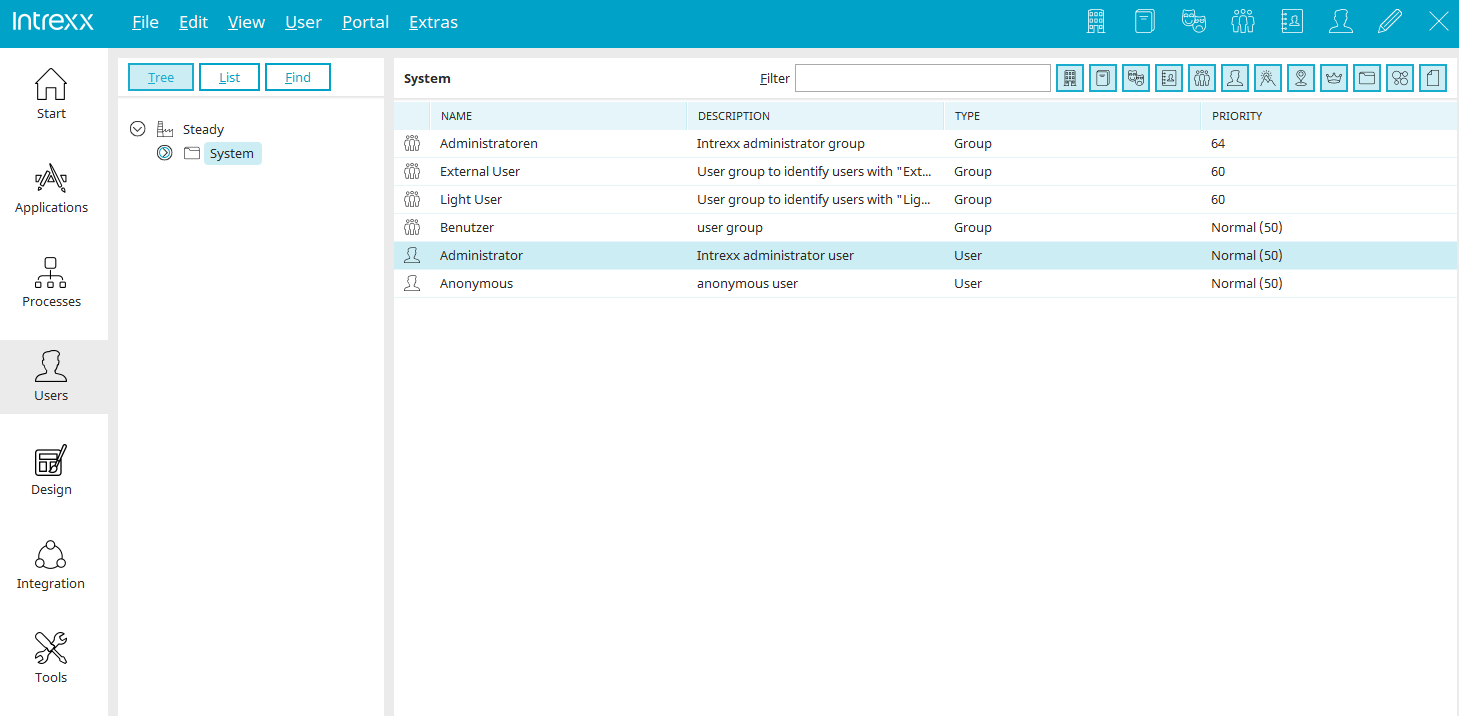
A newly created portal already contains several user groups and users.
Members of the "Administrators" user group have full access to all settings in the portal and all portal permissions. The "Administrator" user is a member of the group. If he is no longer a member of this group, his rights will expire.
"Users" User Group
Members of the "Users" user group have access to the "Home" and "Tools" menu items in the newly created portal. In addition, they have read access to the "Users" application (phone list and organizational chart) and to the "Global Search" application. They are also authorized to use Intrexx Share Chat.
User "Administrator"
The "Administrator" user has all the rights of the "Administrators" user group as long as he is a member of that group.
User "Anonymous"
Unregistered users have permissions for the "Home" menu item on a newly created portal.
Properties of User Groups
General Information
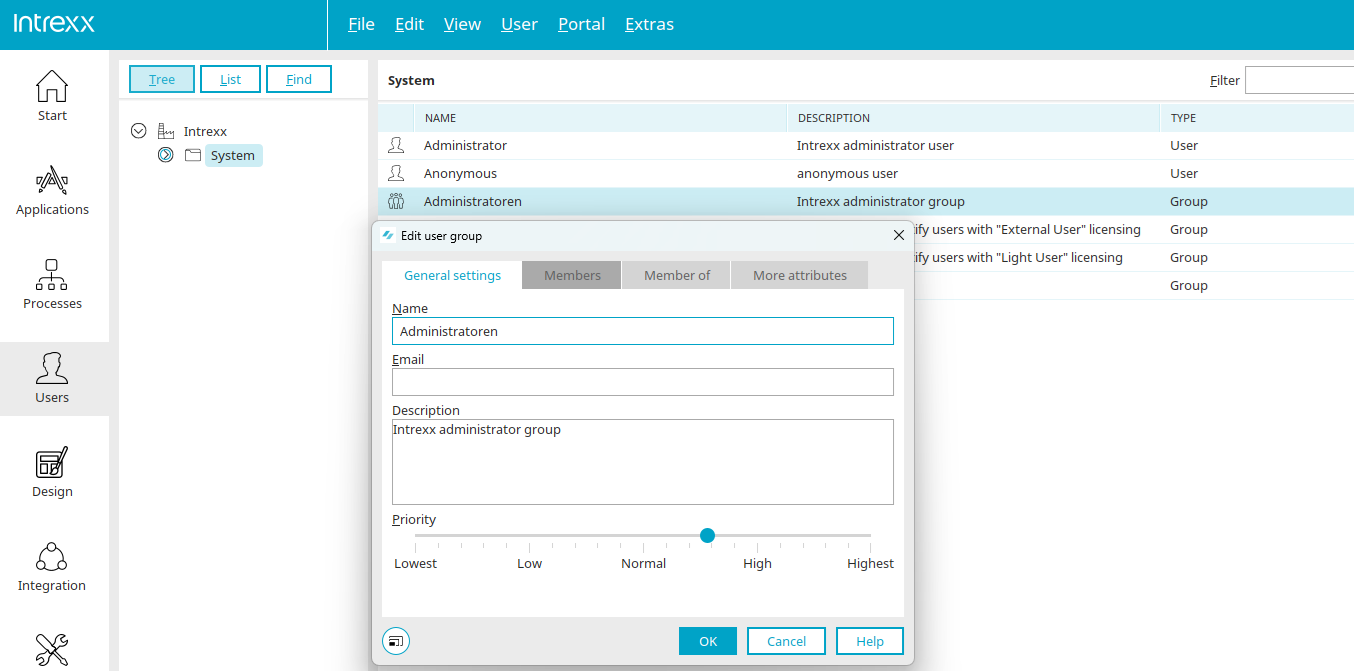
Name
You can edit the name of the user group here.
Enter a valid email address for the user group here.
Description
You can enter a description of the user group here.
Priority
The priority affects the order of the lists in User Management. The higher an item's priority, the higher up it appears in the list.
Members
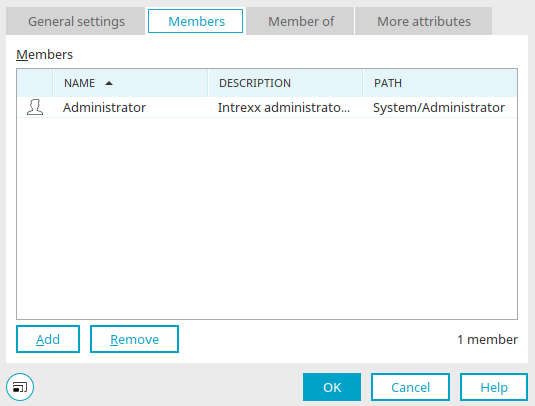
Roles, user groups, and distribution lists can include members (other objects). The corresponding icon is displayed in the first column. The name, description, and path within the organizational structure are also displayed.
Add
Opens a dialog box where you can select a member.
Remove
Deletes the currently selected member.
Member of
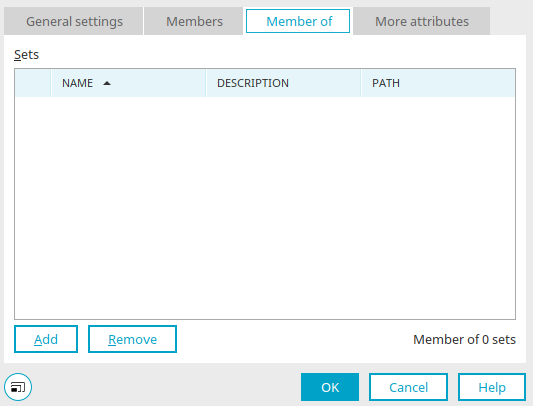
This shows the other objects of which the user group is a member. You can also find this dialog box in your user account. You can find all the information about the settings here.
Additional Attributes
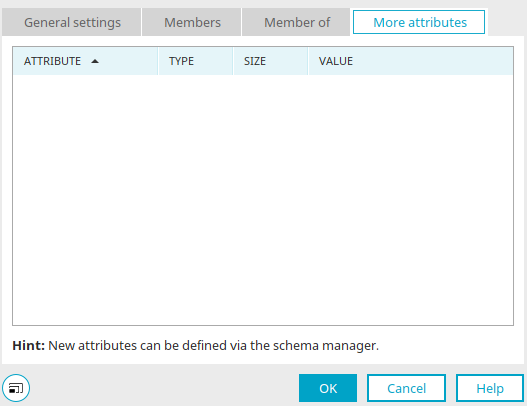
You can find all the information about the settings here.
More Information
Objects, Classes, and Attributes
The sections of the "Users" module
Replication - User and Group Import
Active Directory Integration and Replication Configuration
Portal Login via Identity Provider
Use a proxy server for authentication