

User (System Application)
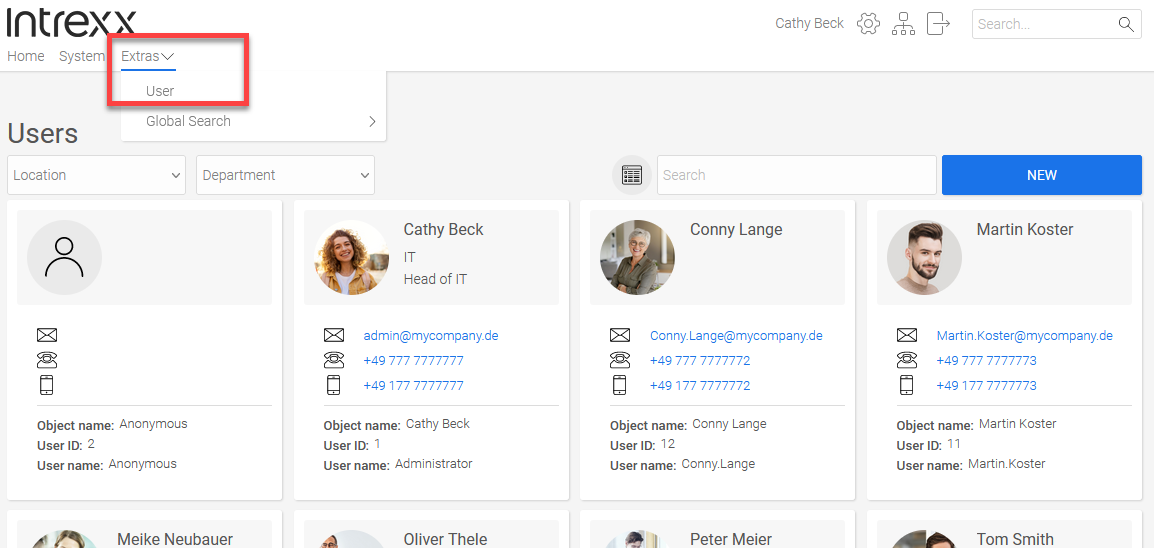
The " Users " system application is already available in every newly created portal and can be accessed via the " Tools" main menu. You can also find the user app under " Templates and Solutions." If it is imported from there, the existing system application will automatically be overwritten. A corresponding message will be displayed during the import.
The User application displays the user data and objects from the Users module.
User objects can be created and edited directly in the browser via the application or in the Users module, provided the user has sufficient permissions (administrator rights). The data is automatically synchronized during this process.
New data fields cannot be created directly in the User application; they must be created as new attributes in the User module in the Schema Manager and then linked to application elements in the System application .
Overview Page
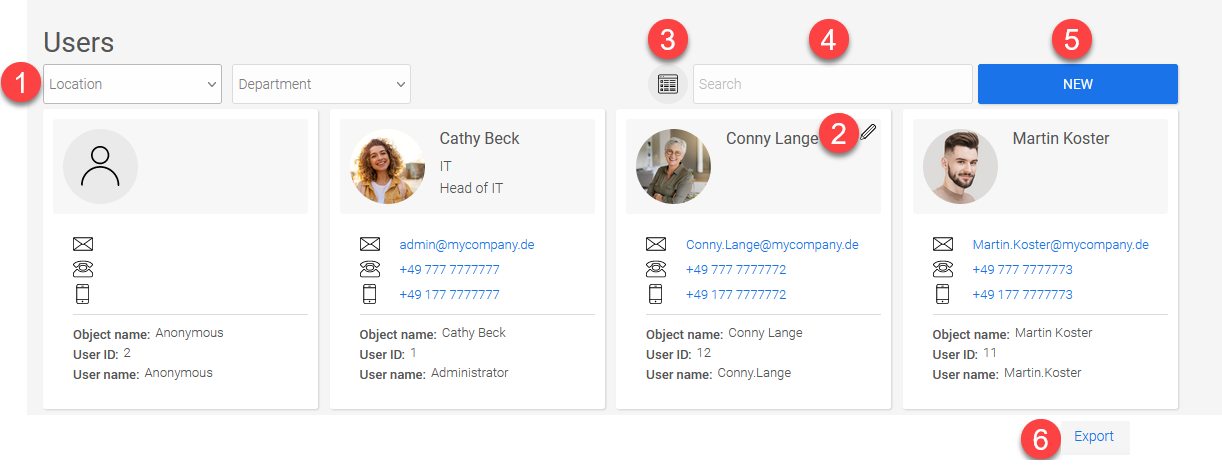
(1) User List
The home page lists all active portal users. On the overview page, administrators can also see all deactivated users. When you click on a user's name or profile picture, their information is displayed on a details page.
(2) Search and Filters
You can use the search field to search by username, object name, first name, last name, work email, and work phone number. In addition, the list can be filtered by location and department.
(3) View
Here, you can switch between tile view and list view. In the list view, user accounts are displayed in a table. The most recently used view is saved for each user.
(4) Create
Opens a page where a new user can be created.
Create and Edit Users
Both the Create (4) button and the Edit  button, which you'll find on each user tile or next to each user in the list view, are only accessible if you have the appropriate permissions. This opens a page where you can edit your user information.
Categories
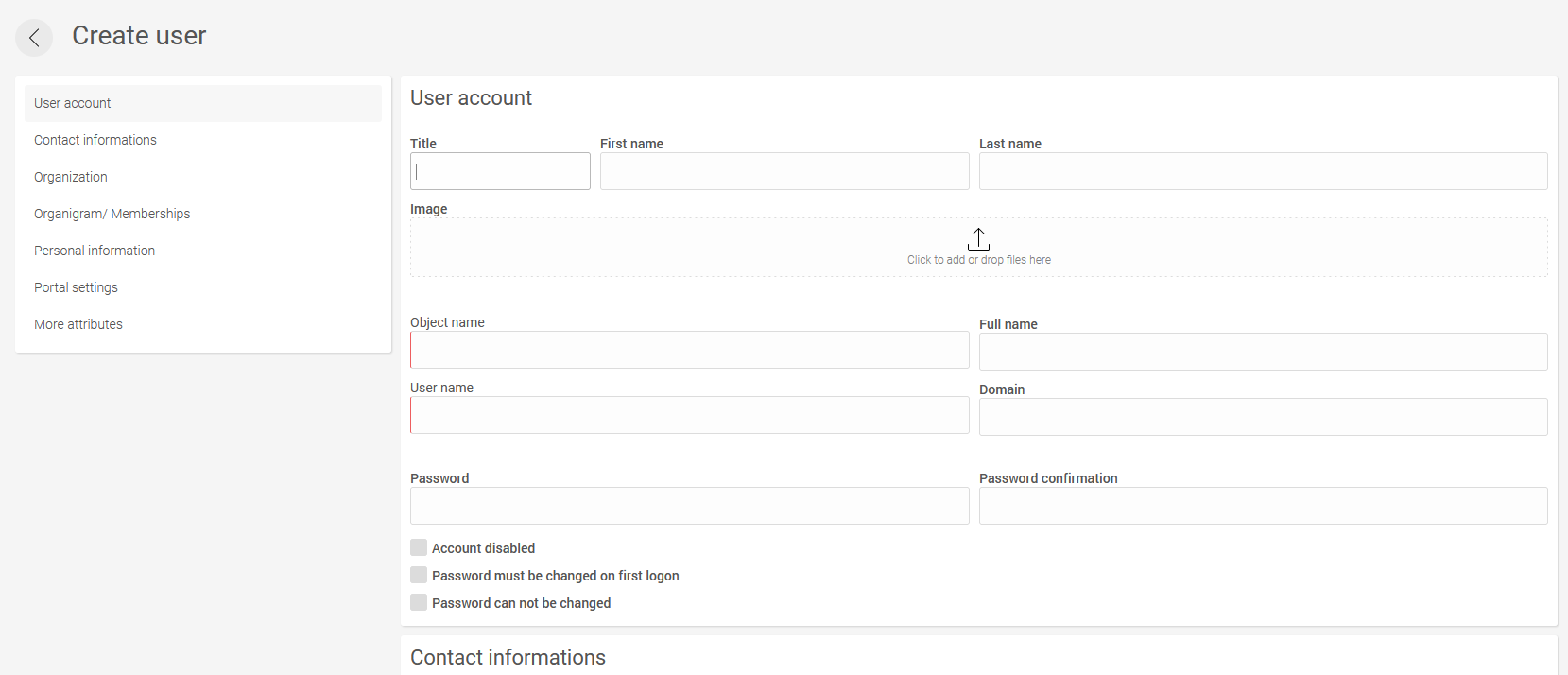
On the left, you'll find the categories into which the user data is divided. Clicking on a category loads the corresponding section in the middle of the page.
User Account
The object name and the user's full name are automatically generated from the first and last names and entered. You can upload a profile picture. When editing existing user accounts, instead of the "Password" and "Confirm Password" fields, you'll find the "Change Password" link here, which you can use to change the user's current password.
If the " Deactivate Account " setting is enabled, a user can no longer log in to the portal.
If the setting " Password must be changed at the next login " is enabled, a user will be prompted to change their password the next time they log in.
When the " Password cannot be changed " setting is enabled, the "Change Password" link—which is accessible in the browser on the portal via the "Settings" submenu —is hidden.
Contact Information
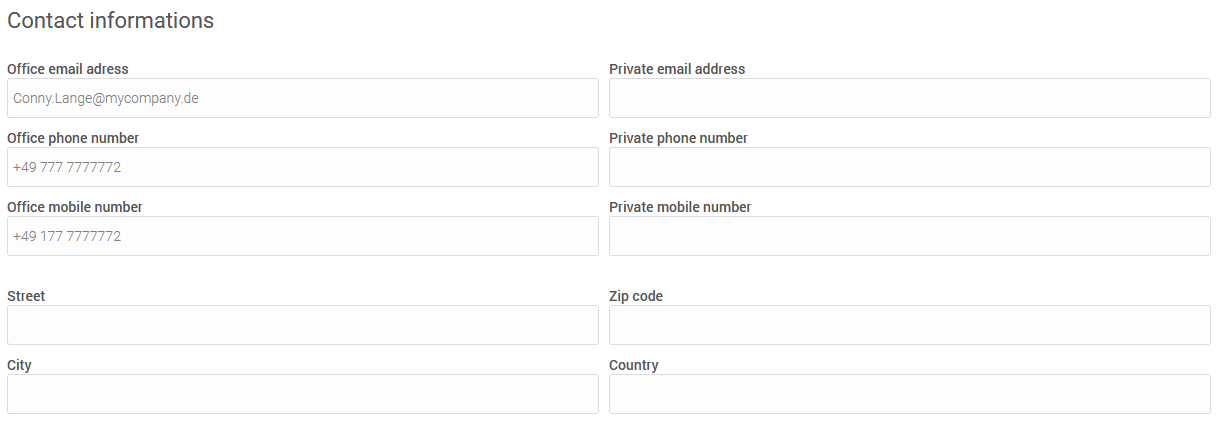
Enter the user's contact information here.
Organization
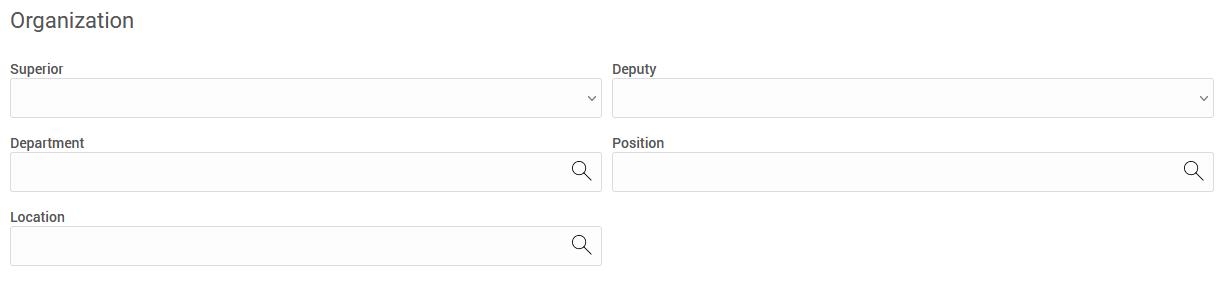
Here, the user's supervisor and deputy can be selected from a drop-down list.
You can select a department, position, or location from the corresponding list by clicking "Search ," provided that departments, positions, or locations have already been entered for users. New departments, positions, or locations can be easily created by entering them in the corresponding field.
Organizational Chart / Memberships

Here you will find the path to the user from the organizational structure of the "Users" module.
Under "Memberships," user objects (e.g., user groups) from the Users module can be selected and assigned to the user. The user then automatically becomes a member of the object.
Personal

Here you will find personal information such as employee ID number, start date, date of birth, and gender.
Portal Settings

Here, you can edit the user's current portal settings.
Save user data
All changes in all categories are saved when you click " Save User Data."
Additional Attributes
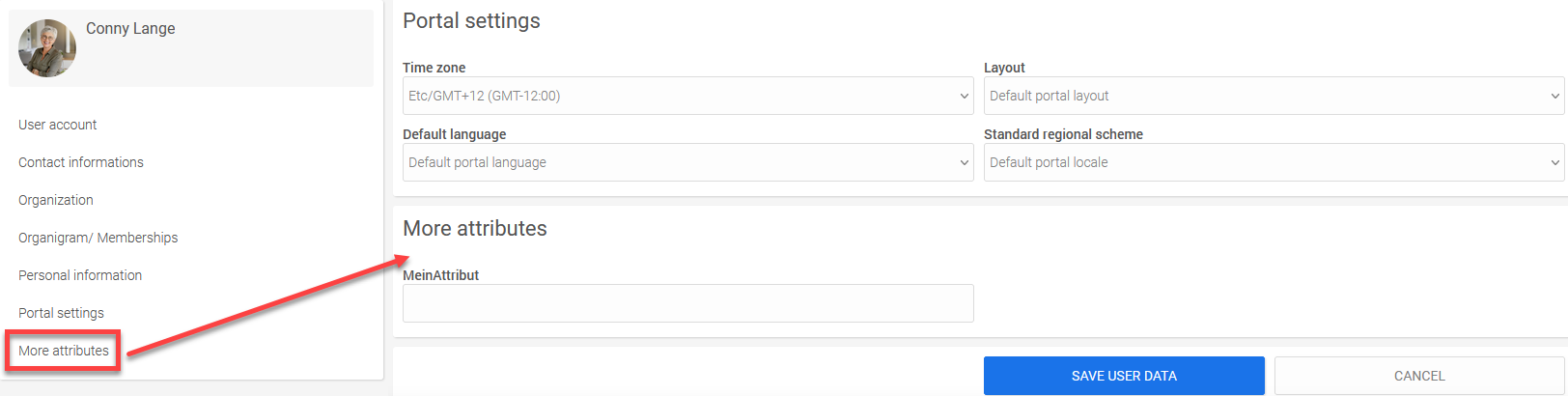
The "Additional Attributes " category is displayed only if attributes for the user object have been defined in the Schema Manager and assigned in the user account.
If attributes are already linked to a control on the input page in the user system application, they are no longer displayed here, since the attribute's values can be edited using the linked control.
If an attribute has not yet been linked to a control, its values can be edited here in the " Additional Attributes " category.