

Filter Condition
A filter condition can be used, for example, in the case of a capital expenditure request, to determine which additional process steps should be carried out if the investment amount is less than €150.
A filter condition can only be configured if a triggering data group (e.g., in the data group event handler) is defined in the process chain to which the filter condition is linked. The result of the filter condition can be linked to additional conditions or actions.
can only be configured if a triggering data group is defined in the process chain (e.g., in the data group event handler):
A condition is considered to be fully and correctly established only when a connection to both of these elements has been established.
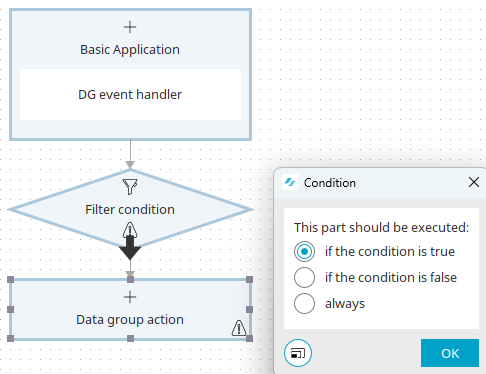
When you link a filter condition to a subsequent process element, a dialog box opens automatically where you can specify whether the following process step
-
always
-
if the condition is met
-
if the condition is not met
is to be performed.
The branch with the "Always" condition is always processed last.
Create a Filter Condition
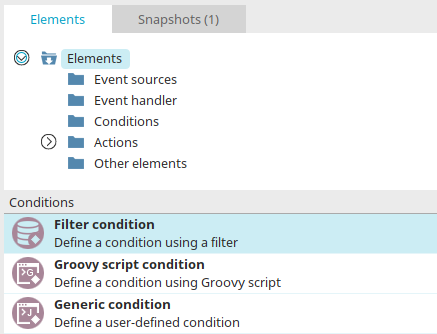
You can find the filter condition in "Processes" under "Elements." It belongs to the "Conditions" category. From there, it can be dragged and dropped to the desired location on the desktop and then configured. General information on creating process elements can be found here.
Once you have created the filter condition on the workspace, double-click the element to open the Properties dialog box.
General
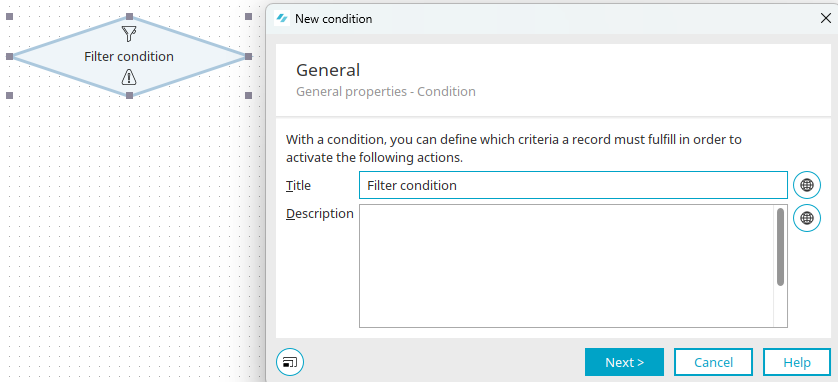
Title
You can edit the title here.
Description
You can enter a description here.
 Multilingualism
Opens a dialog box in each case where the title or description can be entered in multiple languages. You can find more information on this topic here.
Click "Next."
Filter
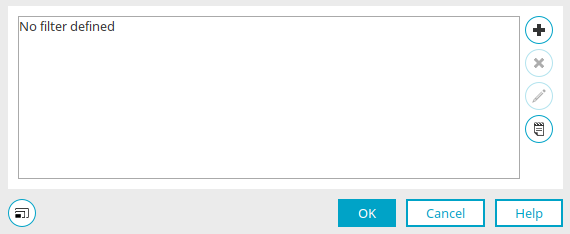
You can find all the information about the settings in this dialog box here.
Click "OK" to complete the configuration.
Exception Handling
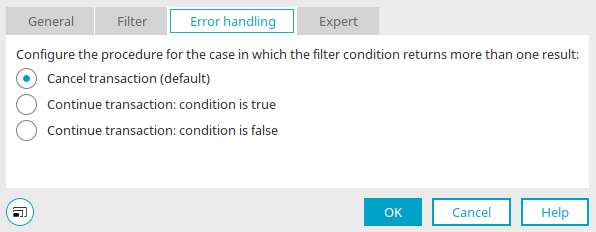
Once the filter condition has been created and configured, you will see the additional "Exception Handling" tab when you reopen the Properties dialog box. Here, you can configure how the condition should be evaluated if it returns multiple results.
Configure the procedure to follow if the filter condition returns multiple results
Cancel Transaction (Default)
The transaction will not proceed.
Continue transaction: Condition met
The transaction will continue if the condition is met.
Continue transaction: Condition not met
The transaction will continue if the condition is not met.
In cases where multiple results are valid—such as when checking for the existence of child records (child data group FKLID = parent record LID)—it may be desirable to continue the transaction. You also have the option here to decide whether the condition should be considered met or not met.