

Tips & Tricks - Page Assistant
This post shows you how to use the Page Assistant to quickly and easily create attractive, responsive applications.
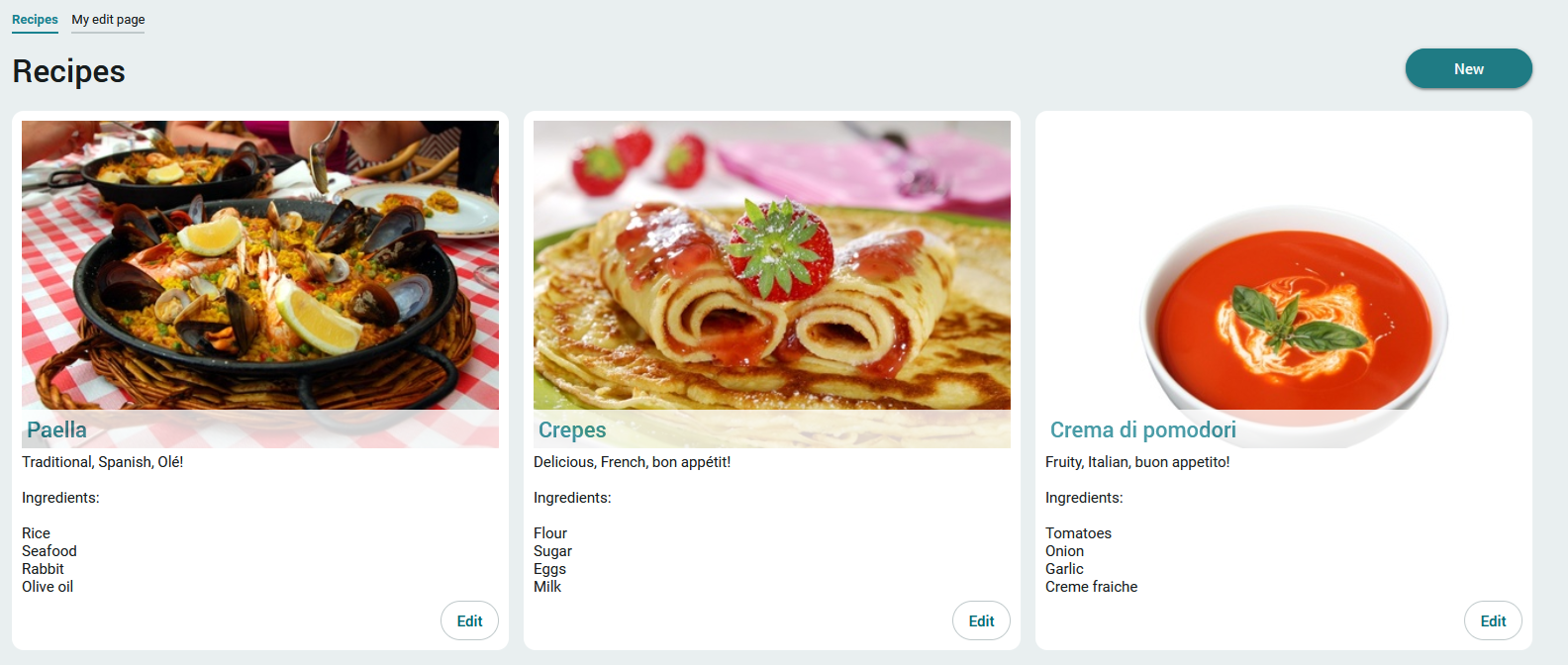
Here you can see the overview page of a recipe app created using the Page Assistant.
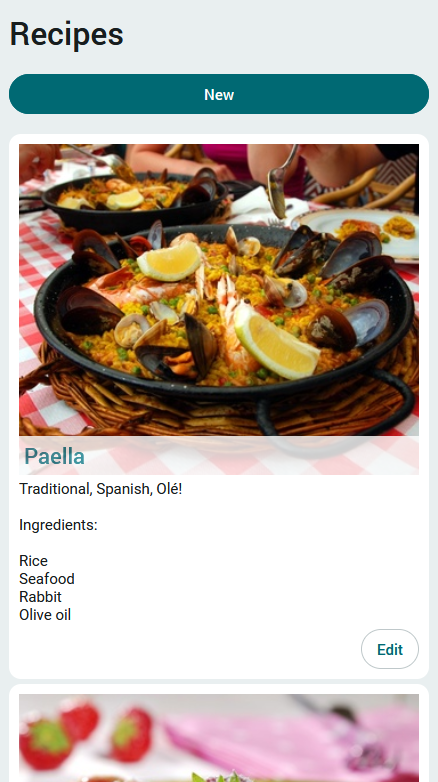
It adapts perfectly to different screen sizes.
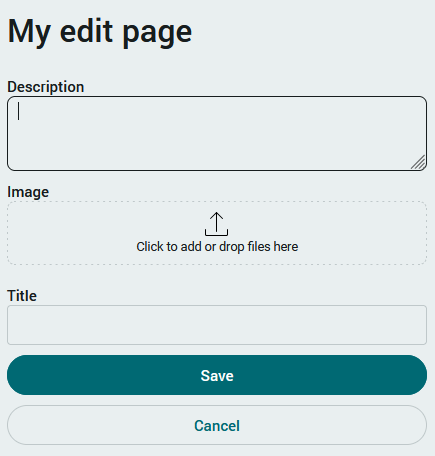
This also applies to the input page we created using the Page Wizard.
Create an Overview Page
In the Portal Manager, the following steps are performed in the "Applications" module:
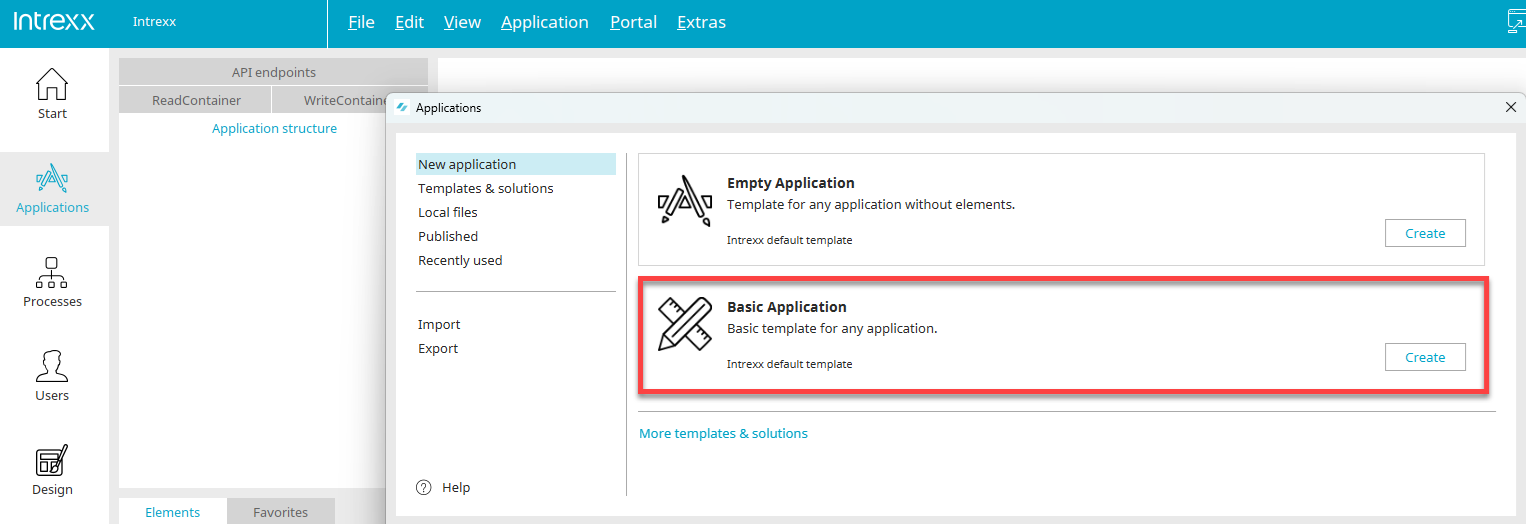
1. Create a new application based on the "Basic Application" template.
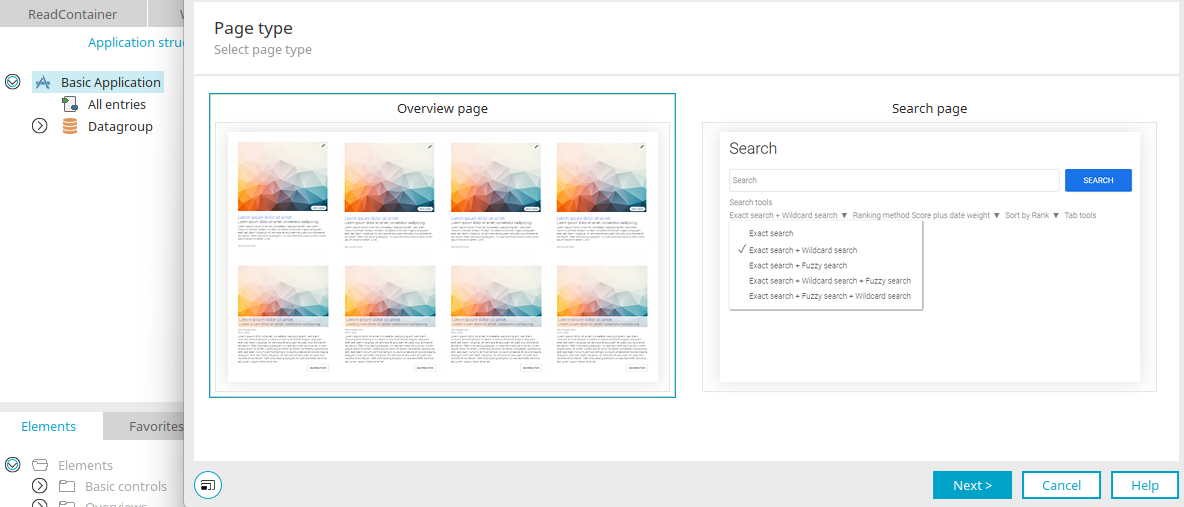
1. Select the "Create Page with Wizard" context menu option for the application node.
2. Then, in the dialog box, select "Overview Page" and click "Next."
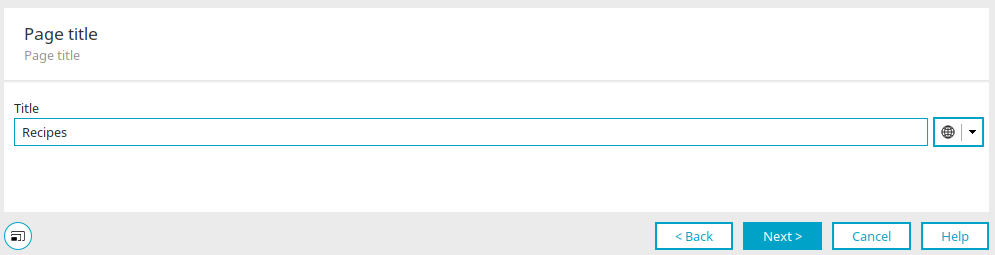
3. Enter "Recipes" as the title here, then click "Next."
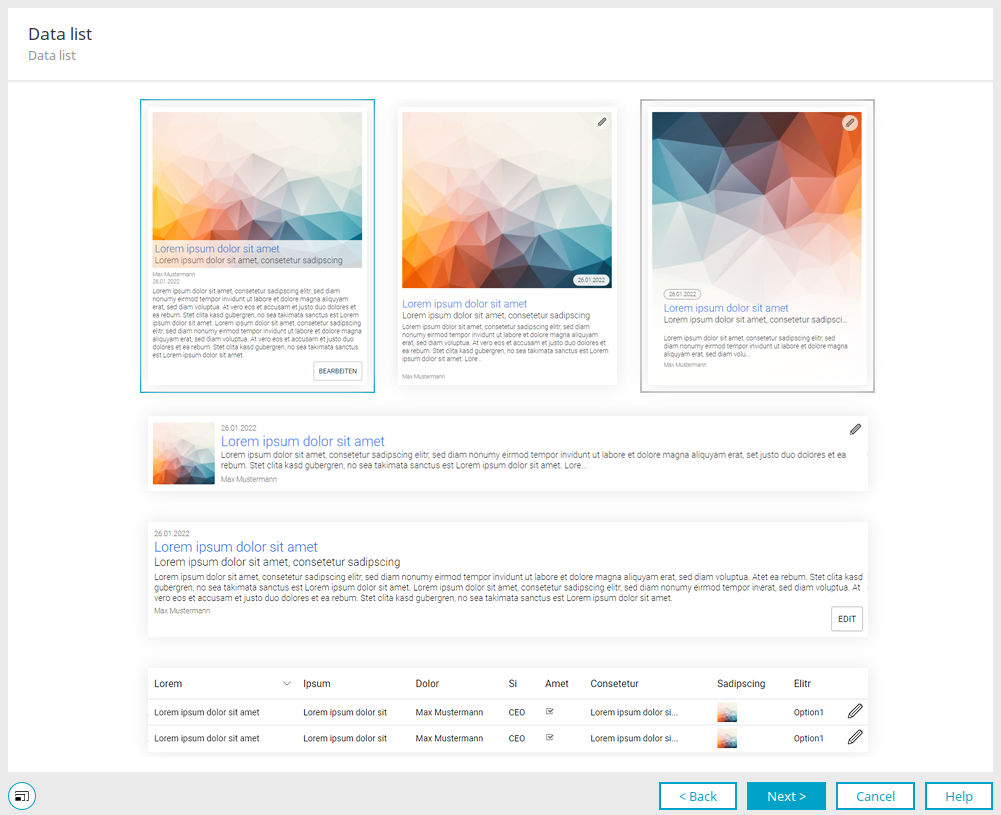
4. Select the first type of data list in the upper-left corner and click "Next."
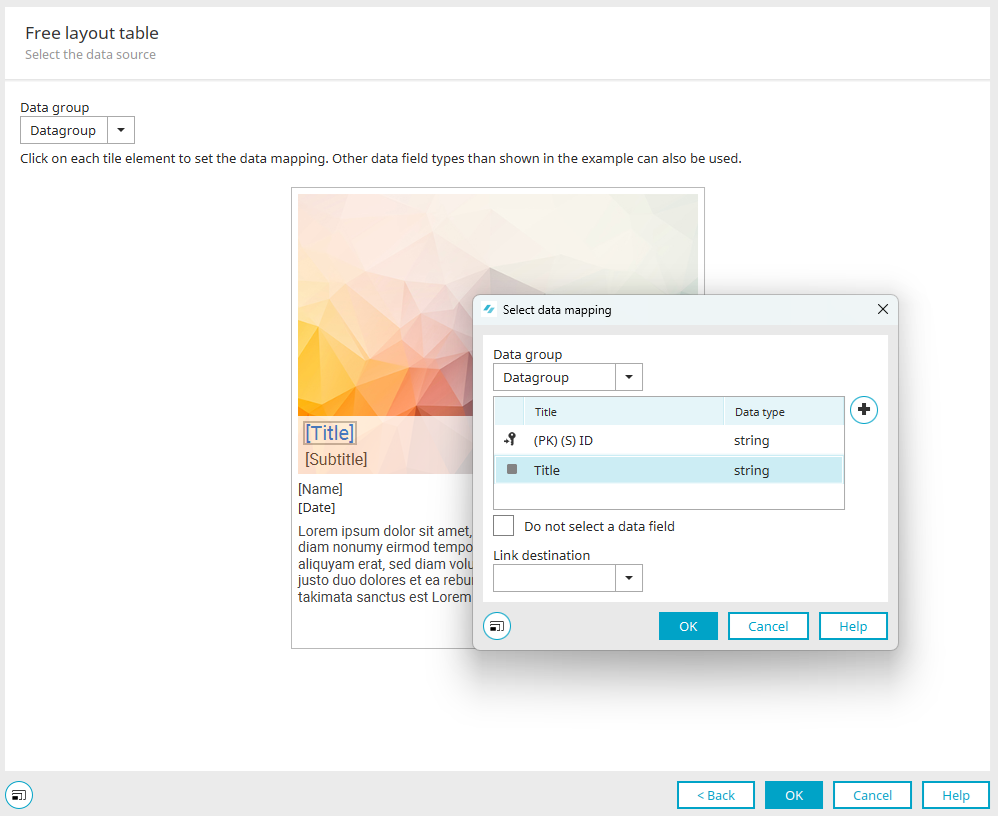
5. Click "Title" here.
6. In the dialog box that opens, select the "Title" data field and click "OK."
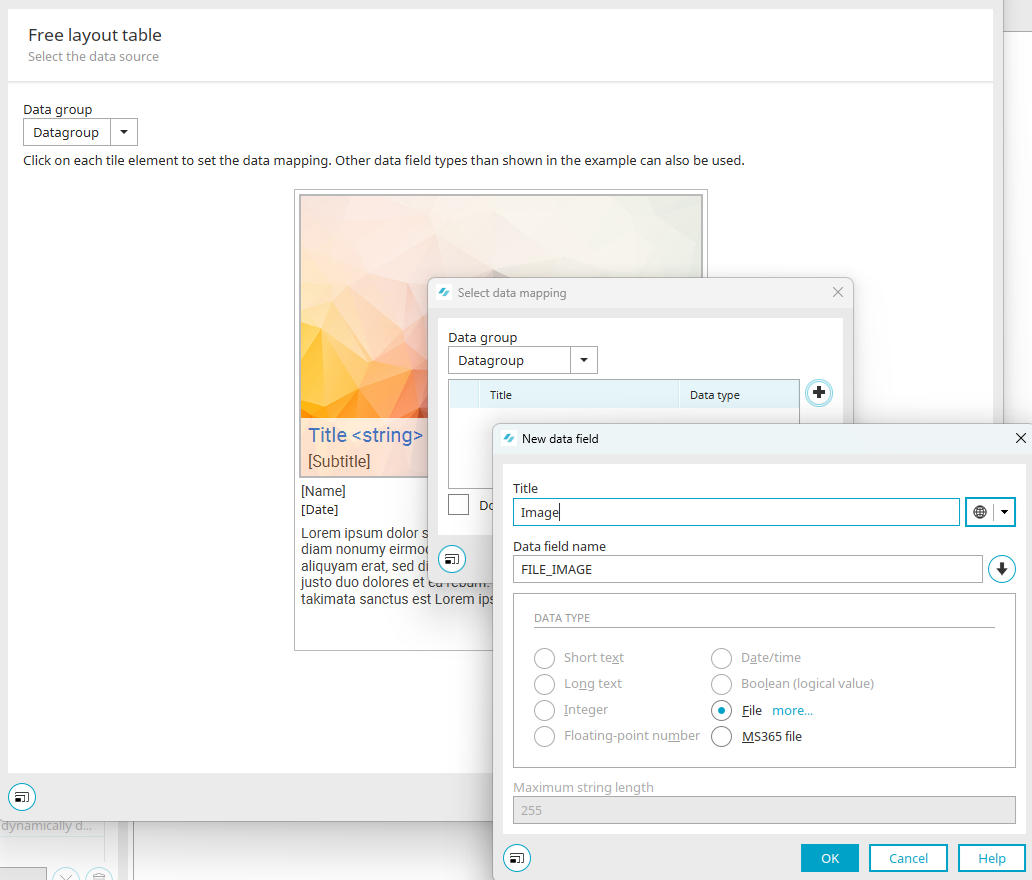
7. Click on the image.
8. In the dialog box that opens, click "Add" next to "  ."
."
9. Enter "Image" in the "Title" field.
10. Close both dialog boxes by clicking "OK."
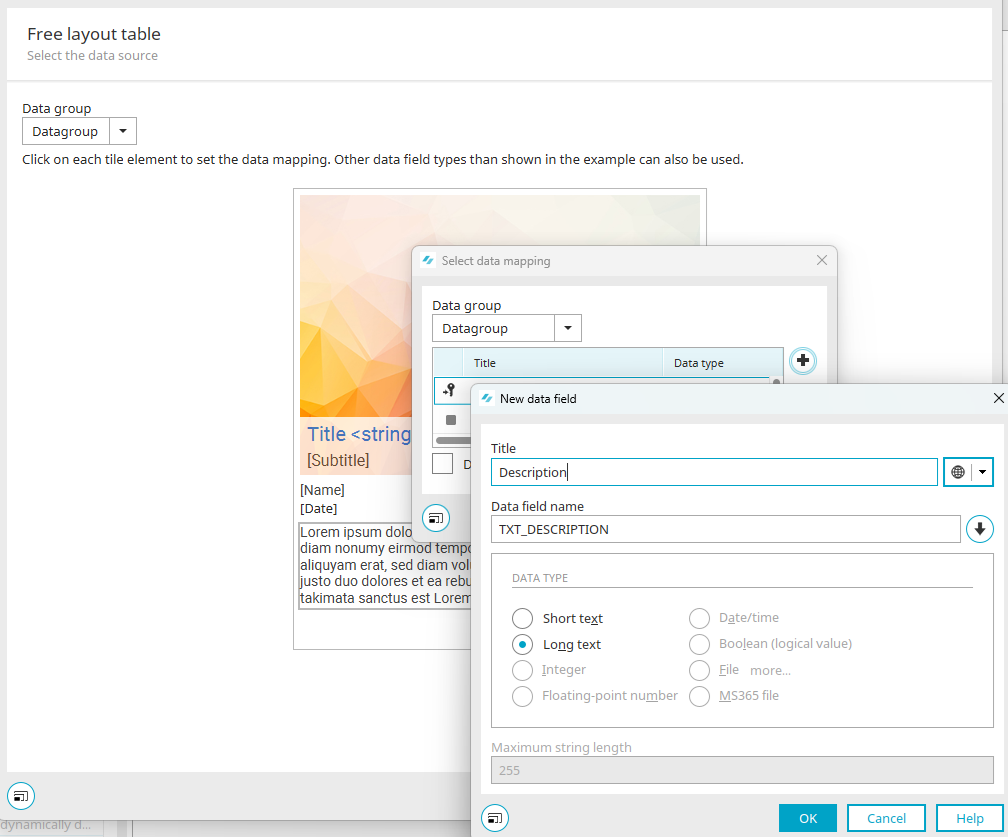
11. Click on the sample text (Lorem Ipsum...).
12. In the dialog box that opens, click "Add" next to " ."
13. In the dialog box that opens, enter "Description" as the title.
14. Close both dialog boxes by clicking "OK."
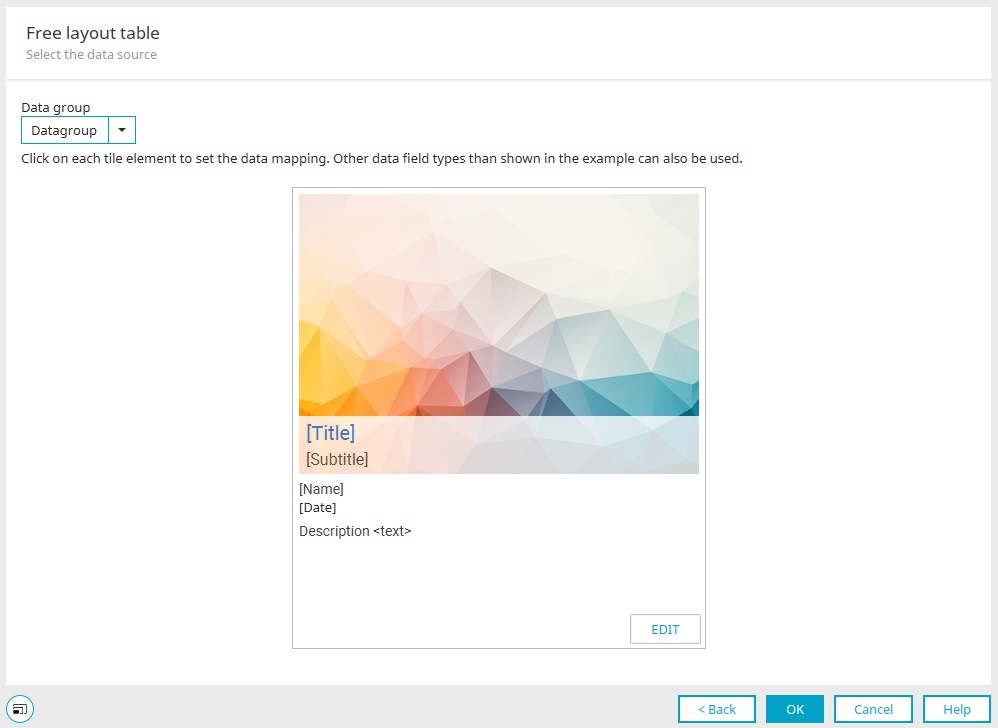
15. Click "OK" here.
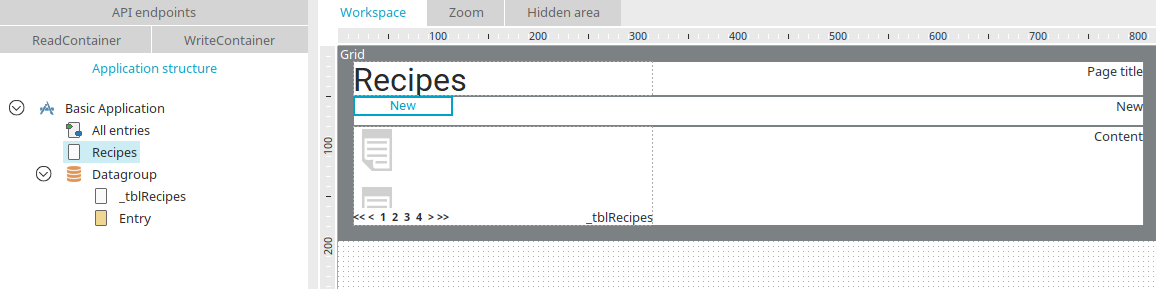
The "Recipes" overview page has now been created.
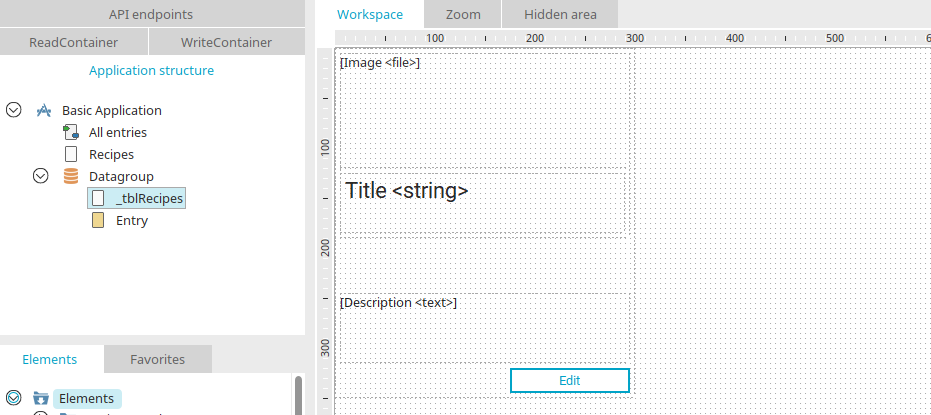
The "_tblRezepte" page in the data group is the view page that is embedded in the custom table on the "Recipes" overview page. It was also generated by the Page Assistant.
Create an input page
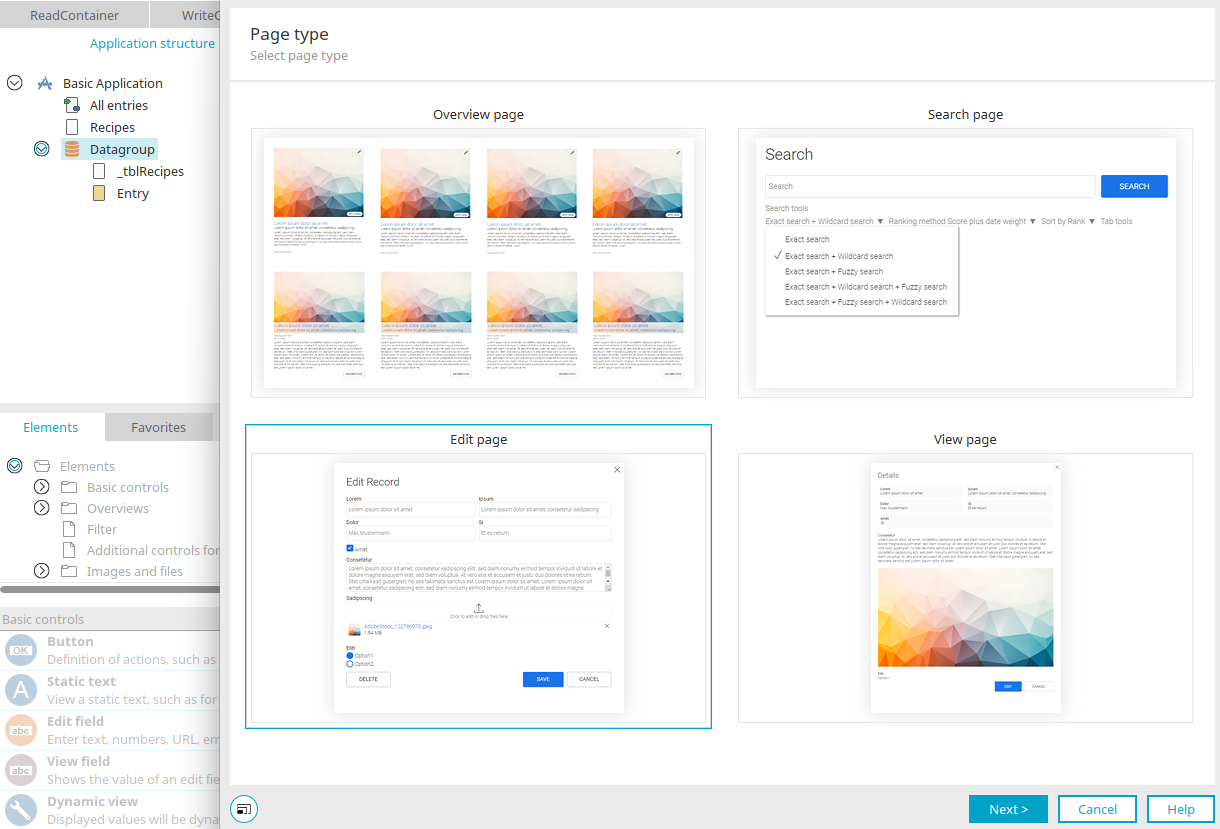
1. Select "Input Page" as the page type from the "Create Page with Wizard" context menu in the data group.
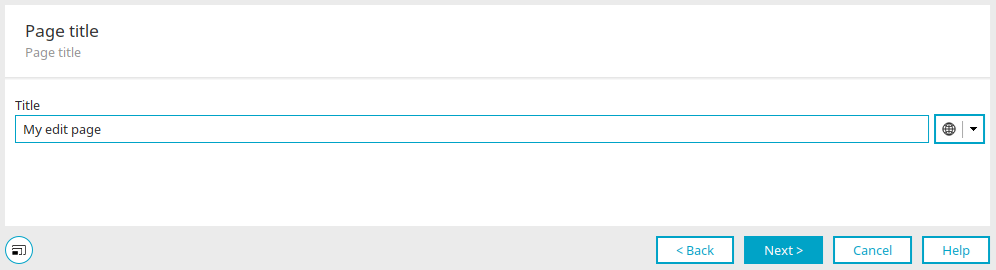
2. In the next step, you can enter the page title. Click "Next."
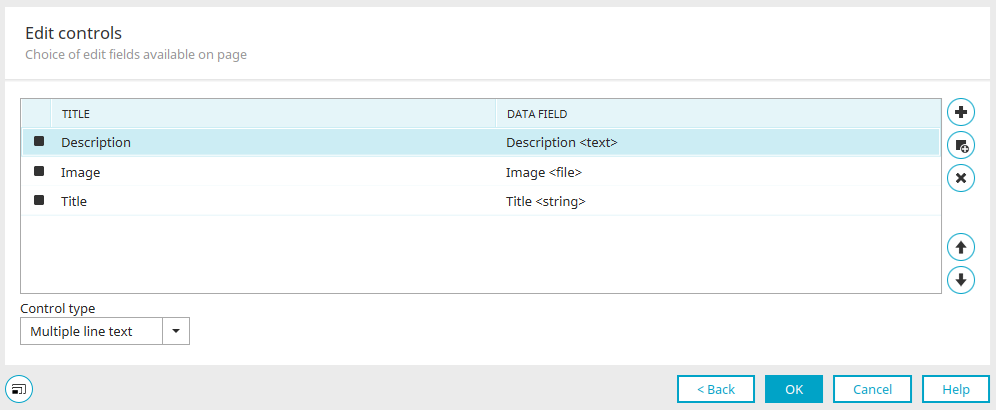
3. When you click "Add Control" at  , the image, title, and description are added to the page as input fields.
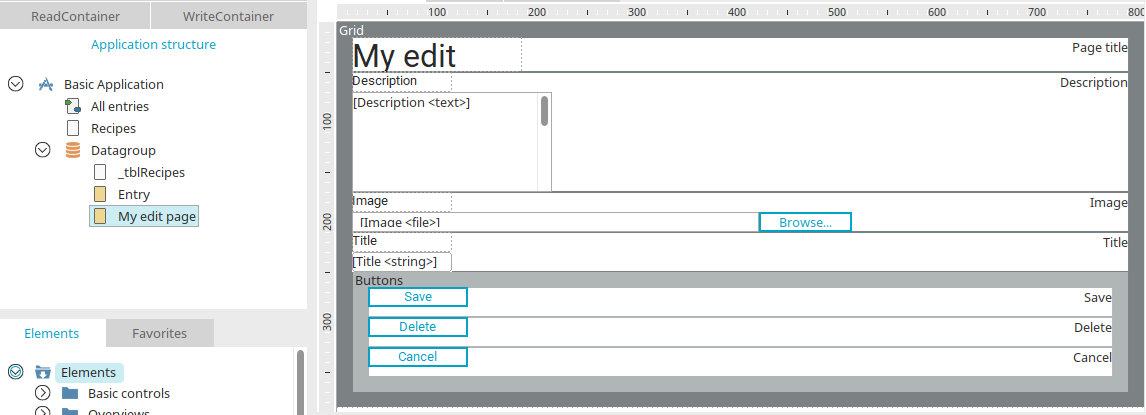
Clicking "OK" closes the dialog box and creates the new input page.
Pages in the Application Menu
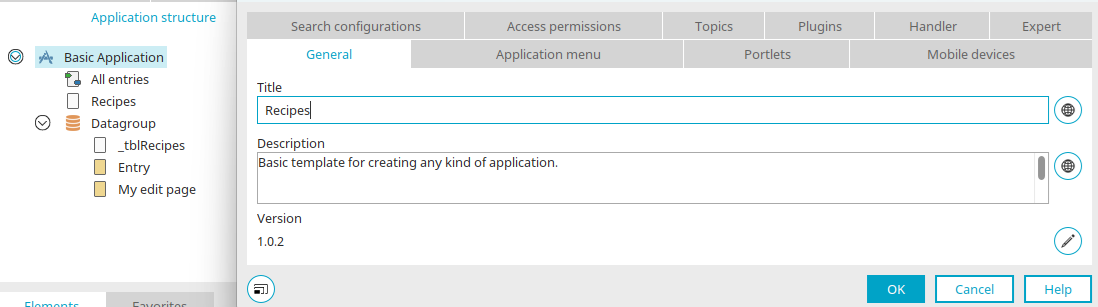
1. Open the application's Properties dialog by double-clicking the application node.
2. Here, you can change the name of the app to "Recipes."
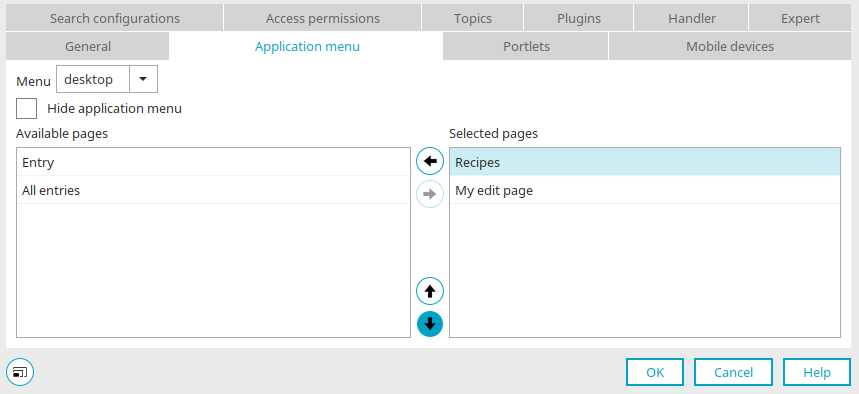
3. On the "Application Menu" tab, select the "Recipes" and "My Input Page" tabs.
4. Save the new settings by clicking "OK."
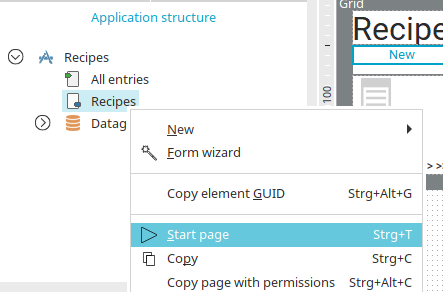
5. The "Recipes" page is set as the home page via the context menu.
Customize Jump Destinations
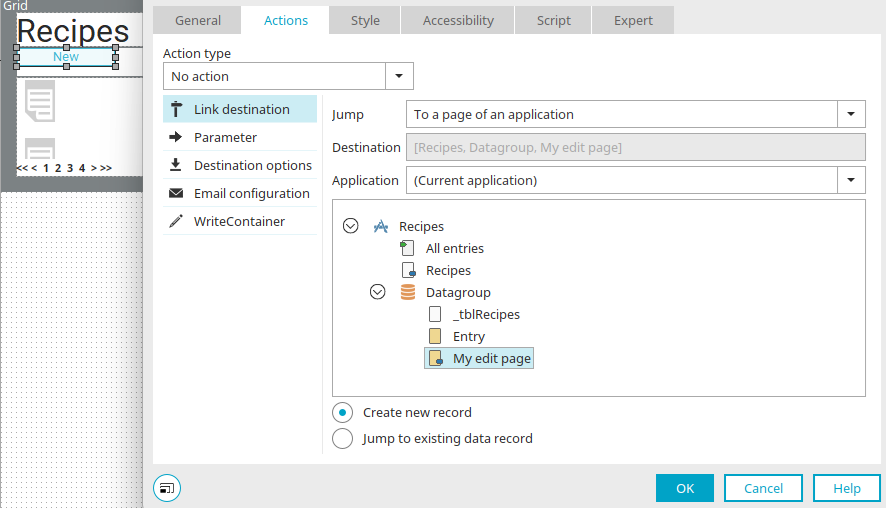
1. Open the Properties dialog box for the "New" button on the "Recipes" overview page.
2. On the "Actions" tab, you can set the jump destination to "My Input Page."
3. Save the new setting by clicking "OK."
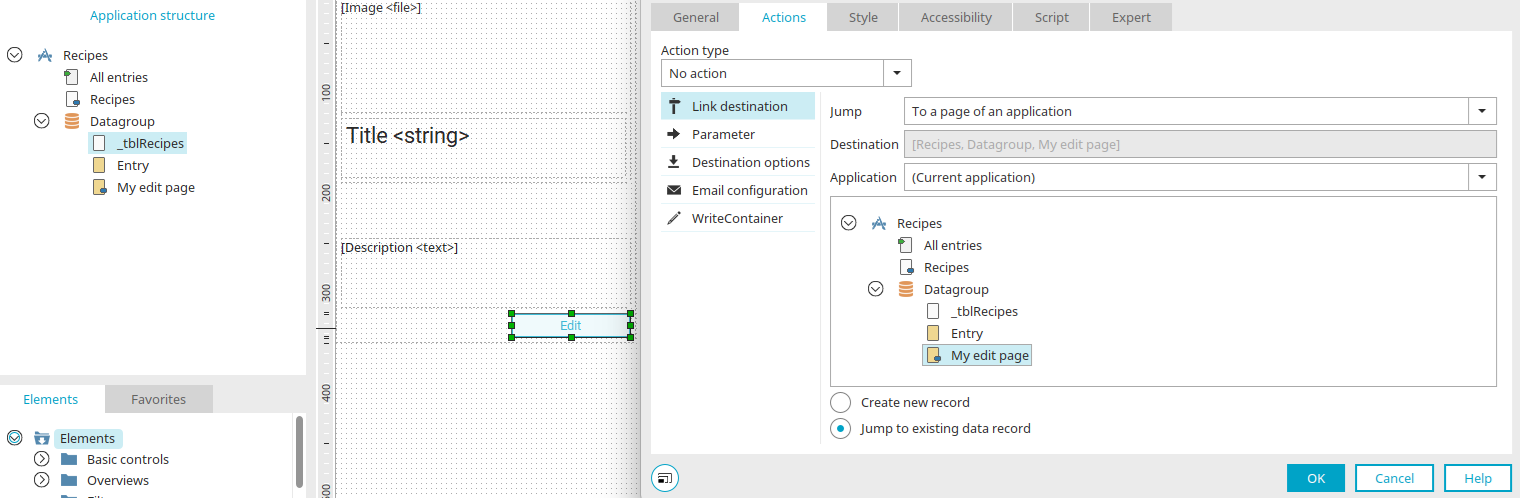
4. The same jump target is also set for the "Edit" button, which you'll find on the "_tblRezepte" page.
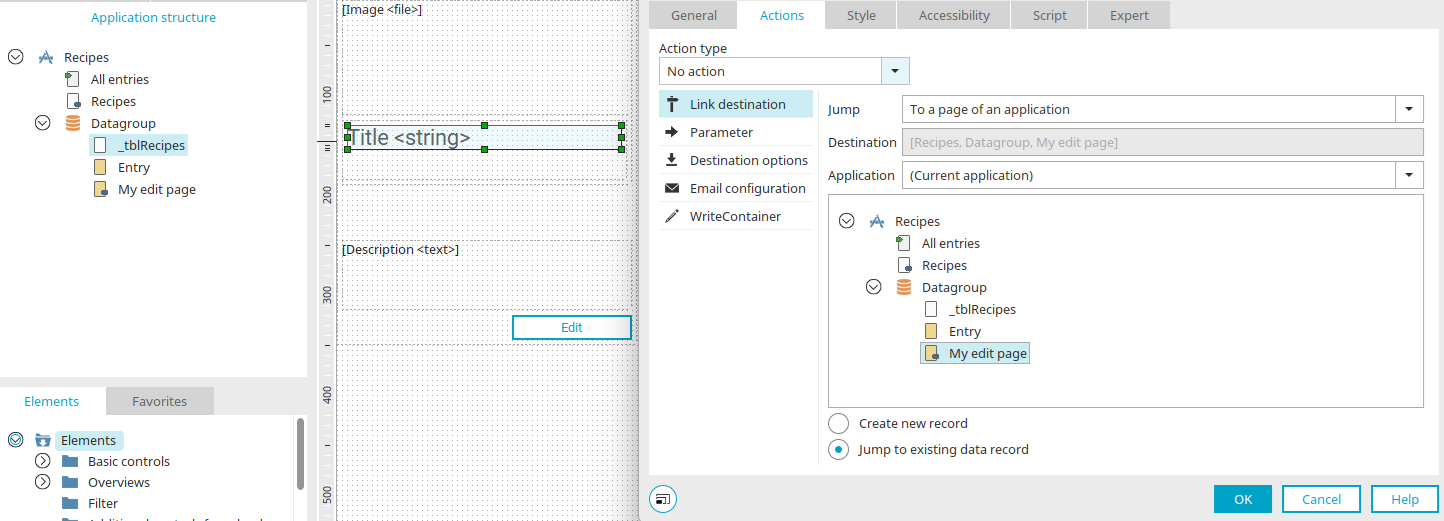
5. On the same page, set the link destination for the title to "My Input Page" as well.
Of course, you can also use the Page Wizard to create a view page that opens when you click on the recipe title. The possibilities are endless. In this Tips & Tricks post, we simply wanted to show you how the Page Assistant works.
The application is now complete. It can be saved, published, and used in the browser.