

What is a portal?
In Intrexx, "portal" is both a central term and a central concept. A portal is the "container" that includes all other objects (applications, processes, users, etc.). The term appears frequently in the Intrexx Portal Manager user interface and is a central entry point for various activities and functionalities.
Portal and platform
General use of language
Portal and platform have the same meaning in everyday language in connection with Intrexx. For example, an intranet is the central platform in the company for employees. Here they can find all the information and use apps that are relevant to them. Here they can interact with other departments and initiate processes.
Technical aspects
In technical contexts, it may be necessary to distinguish between portal and platform. The platform represents the fundamental layer of Intrexx, on which several portals are based or can be operated.

Portal in the Portal Manager
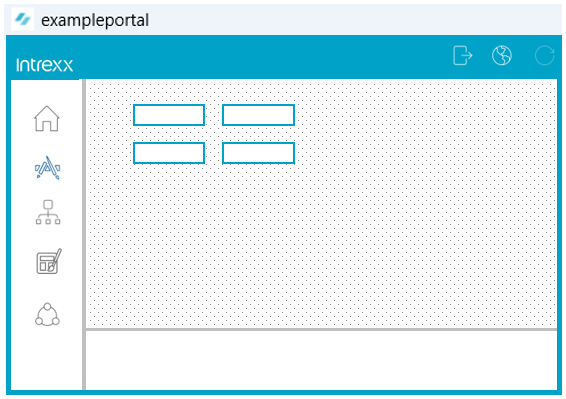
When you start the Intrexx Portal Manager, you must first create a portal or log in to a portal. All activities that you subsequently perform, such as creating an application or a process, are carried out in the portal to which you are currently connected.
The aim of your activities in the Portal Manager is to develop applications, implement processes, etc. and then make them available in the browser, where portal users can then use them.
Portal in the Browser
The portal created in the Portal Manager can be opened in the browser.
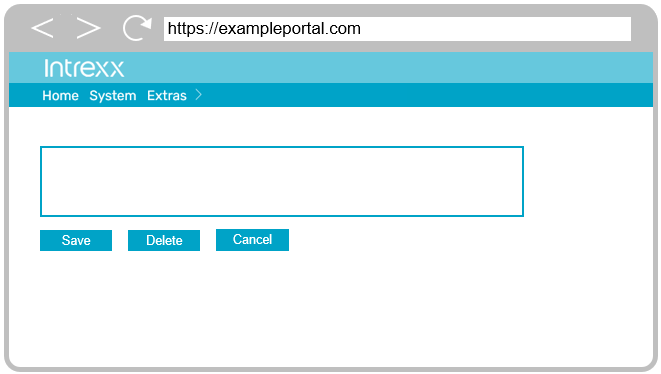
Portal users have access to the applications, processes, etc. that were developed in the Portal Manager. The visual presentation has also been defined in the Portal Manager.
Since the portal is opened in the browser (or on a web server), the functionalities can easily be made accessible to any number of portal users within your organization (intranet) or outside your organization (extranet).
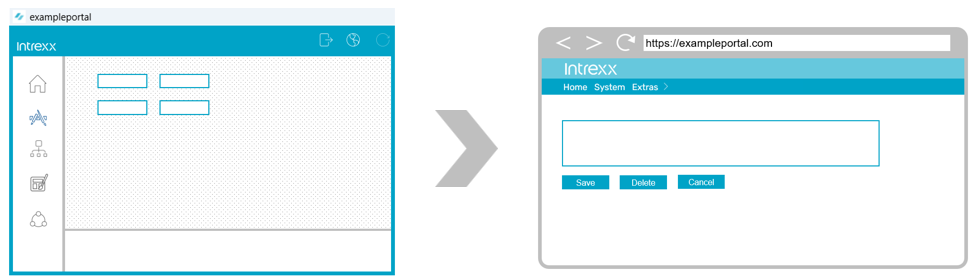
Interaction of the portal in the Portal Manager and the portal in the browser
When you create a portal in the Portal Manager, this is done on the basis of a portal template. There are a number of templates available in the Intrexx Portal Manager. These can be empty or already contain applications that Intrexx makes available to you. Once the portal has been created, you can edit it in the Portal Manager. At the same time, the portal is available on a web server so that the portal can be opened in the browser immediately after it has been created.
If you have developed new applications or made changes in the Portal Manager and then saved them, they will be available to portal users in the browser after a refresh.
Components of the Portal Manager
Below you will find a brief overview of the modules that you will find in the Portal Manager.
Application Designer ("Applications" module)
Intrexx is a low-code development environment with which you can create fully-fledged applications using drag and drop. Elements such as buttons, text boxes, editors etc. are available to you as in a modular system. If you want more individuality, you can write your own code and integrate it into Intrexx.
The main elements of the applications are data groups, pages and elements. The data entered in the browser is stored in the data groups. Pages with corresponding elements are available for viewing and editing the data.
Process Designer ("Processes" module)
In the Intrexx Process Designer, you can transform manual business processes into digital and automated processes. You can define events, such as the occurrence of a certain point in time or the changing of a data record. As soon as these events occur, the processes defined in the Process Designer are triggered fully automatically. This may involve writing a data record, creating a document or updating your dashboard in production, for example.
Data Designer ("Integration" module)
You can integrate a wide variety of external data sources in a portal. This makes data available to portal users in the browser at a central location in a standardized form of presentation within the company. For example, data from SAP and Microsoft Exchange can be displayed side by side as if from a single source.
Users ("Users" module)
Users are managed in the portal. On the one hand, the users who are allowed to use the Intrexx Portal Manager and, on the other hand, the users who are allowed to use the portal in the browser. Roles and rights can be assigned to users so that access to the portal can be controlled granularly in the Portal Manager and in the browser. This means that in the browser everyone only sees what they are allowed to see. And in the Portal Manager, users are only allowed to do what they are authorized to do.
Design ("Design" module)
The portal in the browser usually complies with the corporate design of the company operating the portal. The "Design" module is available for this purpose in the Portal Manager. There you can make all the necessary settings (CSS) so that the portal meets the visual and optical requirements. You can set up a standardized layout for the entire portal including applications or make different settings for individual applications.